
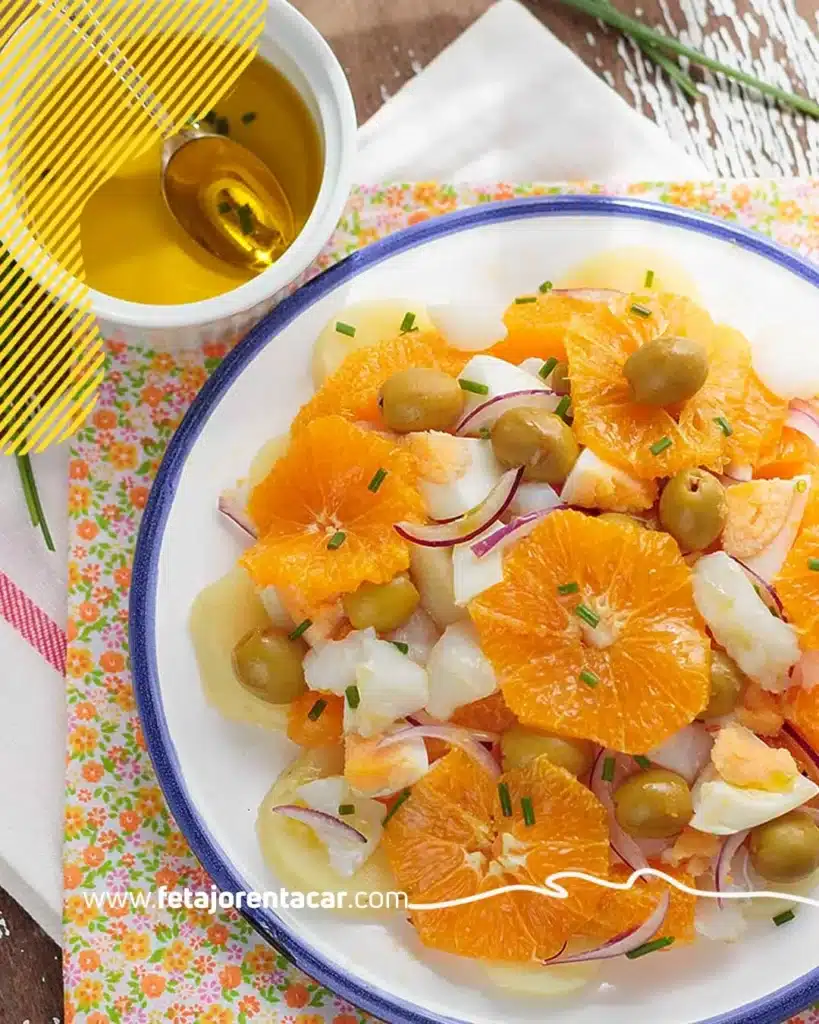
The ensalada malagueña is one of Málaga’s quietest summer icons — a cold dish so simple it almost looks like an afterthought, yet so loaded with provincial identity that a visit to the city in July or August feels incomplete without it. If you are planning a trip to the Costa del Sol this summer, this salad is the kind of small ritual that turns a holiday into a real introduction to local life.
What’s actually in the dish
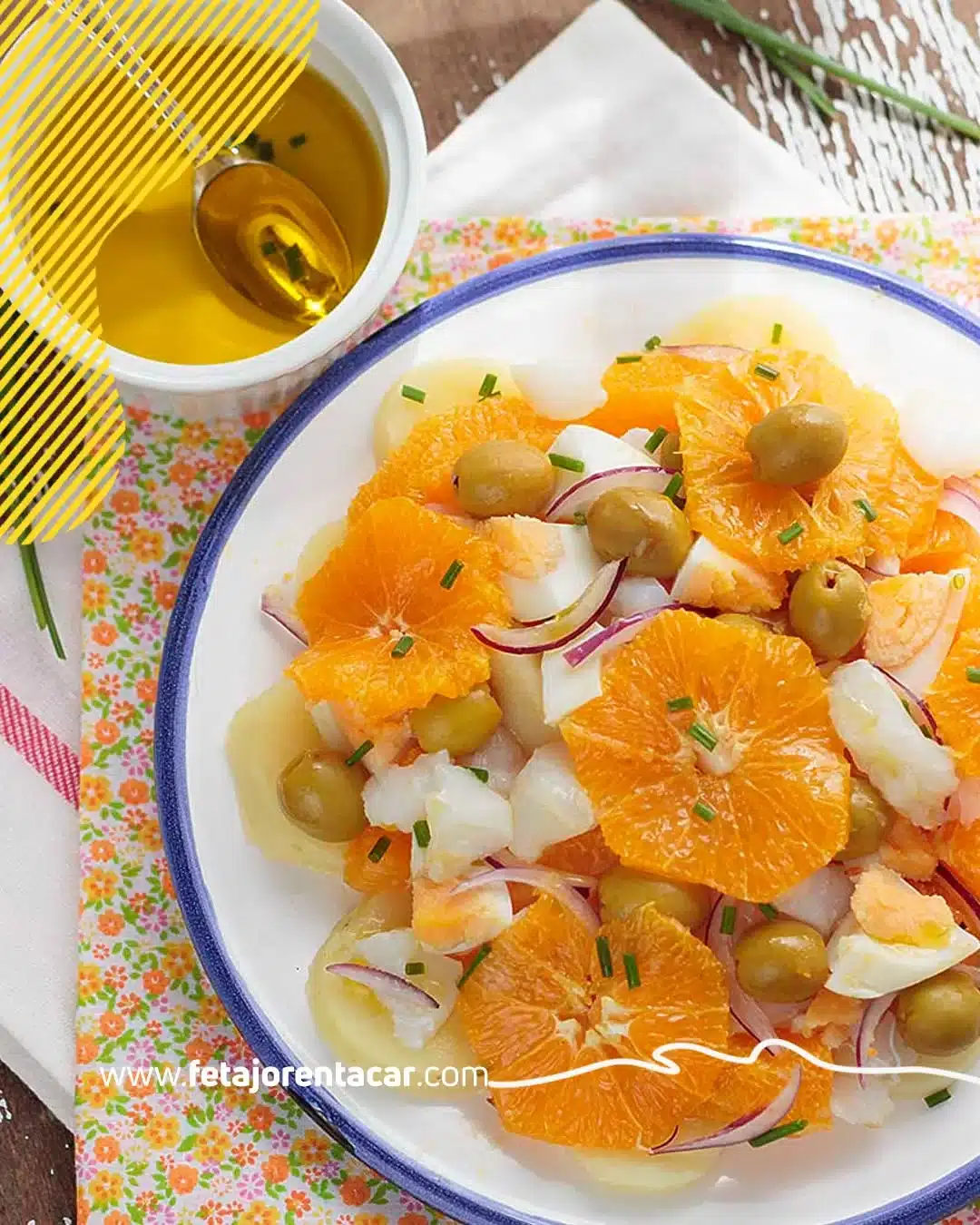
At its core, ensalada malagueña pairs four very humble ingredients: boiled potatoes, salted cod (bacalao), Valencia-style oranges and sweet onion, dressed with extra virgin olive oil. Black olives — the kind sold loose in the markets, often labelled “aliñadas” or “aragonesas” — round it off, and most homes finish the plate with a hard-boiled egg quartered on top. Some kitchens slip in spring onion or a pinch of paprika; others swap the cod for tuna conservas during the leaner weeks. The grace is always in the balance between sweet and salty, with the orange doing the unexpected heavy lifting.
Origins and curiosities about ensalada malagueña
The dish has fishermen’s-tavern DNA, but its real ancestor is the inland “remojón” of the Granada and Almería sierras, where dried cod travelled along salt routes and met whatever citrus the season offered. In Málaga the recipe drifted toward the coast and softened: more olive oil, less acid, more polish. There is no single canonical version — the ensalada malagueña you eat at a chiringuito in Pedregalejo will not match the one your grandmother in Antequera makes, and that is precisely the point. The dish was never meant to be uniform; it was meant to use what each kitchen had in early summer when nights are warm and appetites are light.
What to pair with ensalada malagueña
The instinct of every Málaga local is to reach for something cold and dry to drink alongside ensalada malagueña. The two safest bets are a chilled fino or manzanilla sherry from Jerez or Sanlúcar — both cut the salt of the cod perfectly — and a still-cold dry moscatel from the Axarquía hills, which echoes the orange in the salad without overpowering it. A bottle of local Victoria beer is the popular shortcut; a glass of well-chilled rosé from the Ronda DO works for those who prefer wine without the sherry edge.
On the table, ensalada malagueña usually shares the stage with grilled fish — sardine espetos from the chiringuitos, simple charcoaled gambas, or a piece of rosada — and a basket of pan cateto, the rustic country bread that mops up the leftover olive oil and orange juice. As a starter, gazpacho or ajoblanco can sit alongside it without crowding the palate; as a main, a few quartered tomatoes with good sea salt are honestly enough.
Where and when to try ensalada malagueña in Málaga
You can find ensalada malagueña on most traditional Málaga menus from June through September. The reliable addresses inside the city are the old-school tabernas in the casco antiguo — Casa Lola, El Pimpi, Café Central — and the family chiringuitos lining the Pedregalejo and El Palo seafront, where the salad usually arrives within minutes of you sitting down. During the Feria de Málaga in mid-August it shows up everywhere, from the city’s casetas to the daytime real in the centre, paired with cartones of cold Cartojal moscatel — a marriage of orange-on-orange that locals defend with quiet pride.
Make a road-trip out of ensalada malagueña across the province
Half the fun of ensalada malagueña is that no two villages prepare it the same way. Vélez-Málaga leans into the citrus side and reaches for bitter “navelinas”. Ronda’s mountain restaurants reach for thicker, drier cod and a heavier hand with olive oil. Antequera tucks in finely sliced sweet onion and skips the egg. Frigiliana finishes the dish with a flash of its famous local honey on the sliced orange. A morning in one inland town and an evening in a coastal chiringuito will give you two completely different reads of the same dish — and that is the part that turns a single recipe into a route.

If you are putting that route together yourself this summer, having a rental car makes the difference between one taverna lunch and a real ensalada malagueña tour of the province. Renting with Fetajo Rentacar in Málaga gives you the flexibility to chase the sardine espeto in El Palo at lunchtime and still climb up to Frigiliana or Ronda for dinner the same day. You can also check the wider Costa del Sol gastronomy circuit on the map and design a tasting drive of your own around the dishes that catch your eye.
Frequently asked questions about ensalada malagueña
What does ensalada malagueña taste like?
Bright, balanced and saline. The cold orange and sweet onion round out the salt from the cod, the olives bring depth, and the olive oil glues everything together. It is more refreshing than rich.
Is there a vegetarian version of the dish?
Yes. Many home cooks skip the cod entirely and double the olives and capers, or replace the fish with a soft cheese such as cured tuma or a young manchego. The orange-and-onion base is what really defines the salad.
What is the best wine to pair with it?
Try a chilled dry moscatel from the Axarquía, a fino or manzanilla sherry, or — during a feria — the local Cartojal moscatel served very cold. All three highlight the citrus side of the salad without fighting the cod.
Where can I try the salad in Málaga city?
Most traditional tavernas in the casco antiguo and the seafront chiringuitos of Pedregalejo and El Palo serve it through the summer. Casa Lola, Café Central and El Pimpi are reliable in-town picks; out by the beach, look for the family-run chiringuitos that grill espetos in the sand boats.
When is it in season?
Summer. It appears on most menus from June and stays on through September. The dish is built around oranges still good from late spring and the heat of high summer — the colder you serve it, the better it works.